|
|
|
№ 4 (248), 25 november 2025
doi: 10.25198/1814-6457
 Pedagogics
Korneva I.N., Suzdaleva A.M. TRAINING STUDENTS IN GENERAL EDUCATION INSTITUTIONS TO PROVIDE FIRST AID TO VICTIMSDangerous situations that constantly arise in our lives can be tragic for people, leading to subsequent incapacity for work or disability. Such consequences most often arise due to delays in providing assistance or the unwillingness to provide it. Currently, timely first aid to victims in extreme situations is extremely important. People can get into trouble during natural disasters, manmade accidents and catastrophes, social emergencies, military actions, terrorist attacks, etc. Learning how to properly provide timely first aid to victims is essential. The consequences of injuries and the health of people depend on how correctly and effectively first aid is provided. Effective training of high school students in first aid to victims will increase the frequency and quality of necessary assistance, which in turn will reduce mortality from injuries and emergency conditions. Pedagogical conditions that facilitate the effective preparation of high school students for first aid include the use of innovative teaching approaches, such as case studies, quiz codes, online webinars, debates, presentations, master classes, training sessions, exercises, etc. The experimental study was conducted from 2023 to 2024 at Secondary School No. 56 in Orenburg. Tenthgrade high school students participated in the study. The topic of first aid in Fundamentals of Homeland Security and Defense (FHSD) classes is broad, and general education institutions use a wide range of tools to facilitate students' acquisition of knowledge, skills, and abilities related to the topic under study.Key words: first aid to victims, general education institutions, action plan, human health, pedagogical conditions, case study method.
Kostikov S.V., Martishina N.V. FACTORS IN THE EMERGENCE OF FOLK SCHOOLS FOR YOUTH IN 19THCENTURY DENMARKRelevance of research is based on the presence of rapid changes in all aspects of our lives, and education is not an exception. The mentioned changes encourage us to seek for solutions which are appropriate to the challenges and requirements of modern life. The process is complex. On the one hand, it contains search and implementation of innovations which are unique. On the other hand, revision of the existing ideas and experience leads to undertaking attempts to adapt and integrate them into actual and forecastable life models. There is also a worldwide trend to create, develop and protect “national heritage” simultaneously interacting with other cultures in order to compare, match and mutually enrich existing educational models. These trends, providing absence of conflicts, are used as a basement for creating productive present and future. Furthermore, the importance of valuesemantic polylogue performed in different (time, spatial and cultural) coordinate systems should not be avoided. This article is an example of the mentioned above. The aim is to identify and justify the prerequisites of creation and development of Folk High Schools which served as a prominent alternative to state educational system in the second half of XIX century and in the period prior to WWII. That time was similar to present in regard of tremendous changes of society. The FHS’s experiences and achievements were eagerly adopted in Scandinavian and other countries. Research result, presented in the article, facilitates and broadens understanding of alternative educational systems and influence of historical, social, economic and cultural phenomena and processes on school and education in general, adds to the history of pedagogical and educational science as well as to comparative pedagogy. Key words: Scandinavian education, Danish education system of the 19th century, folk high schools, development of folk schools for youth, pedagogical philosophy, N.F.S. Grundtvig, K. Kold.
Chukhin S.G., Chukhina E.V. TRADITIONAL VALUES AS A FACTOR IN THE FORMATION OF RUSSIAN CIVIL IDENTITY OF SCHOOLCHILDREN IN MODERN SOCIOCULTURAL CONDITIONSThere is a contradiction between the social mandate of Russian society to preserve and strengthen traditional values in the general education system, which ensure the formation of Russian civic identity among schoolchildren, and the current state, conceptual justification, and procedural and technological support in educational practice for the actualization of traditional values in Russian society, which have partially or completely lost their sociocultural objectification. The aim of our study was to identify and substantiate the essence and significance of the identification potential of traditional values in Russian society. The essence of traditional values, from the perspective of pedagogical science, can be defined through a functional approach, arguing that the concept of
Yurchenko M.A. FORMATION OF NATIONAL IDENTITY AND CIVIC CONSCIOUSNESS: PROFESSIONAL AND PEDAGOGICAL CULTUREIn the context of globalization and growing cultural diversity, the education system faces the need to develop students' national identity and civic consciousness. However, the current level of professional and pedagogical culture among teachers is often insufficient to address these challenges. An analysis of professional development programs revealed a lack of comprehensive interdisciplinary courses that would integrate teaching and learning, combining the theoretical foundations of various fields of scientific knowledge with pedagogical practice. The goal of my research was to overcome this deficiency by developing a specialized program combining cultural studies, political science, philosophy, and pedagogy. The professional development program I developed is structured into two modules: a theoretical module devoted to the foundations of identity formation, and a practice-oriented module exploring new didactics (the "projectbased learning" system). Particular attention is paid to developing teachers' skills in working in a multicultural environment, critical thinking, media literacy, and the use of modern educational technologies. Testing the program at several educational levels (school teachers, college professors, and university instructors) confirmed its effectiveness in helping students master methods of designing educational activities, analyzing discourse, and developing tolerance. The main conclusion of this phase of the study is that the systemic approach implemented in the course allows for a qualitative improvement in the level of professional and pedagogical culture in terms of developing national identity and civic consciousness in students, while the chosen formats facilitate its adoption by colleagues from different regions of the country and the application of the author's concept in a variety of educational contexts. The program meets the requirements of educational standards and the professional standard "Teacher," helping to bridge the gap between theory and practice, and its implementation strengthens a unified educational space and the spiritual and moral foundations of society.Key words: Citizenship, National Identity, Professional Development of Teachers, Professional Pedagogical Culture, Didactic Concept.
Yezhova T.V. DIDACTIC POTENTIAL OF COOPERATIVE LEARNING TECHNOLOGY IN FOREIGN LANGUAGE EDUCATION OF SCHOOLCHILDRENIn order to improve the quality of foreign language training for schoolchildren, a search for effective teaching methods and technologies is underway. Improving the quality of foreign language education for schoolchildren, creating a developing and motivating educational environment, and strengthening the practice-oriented nature of learning are largely due to the didactic opportunities and advantages inherent in collaborative learning technology. Collaborative learning technology also serves as an effective means of solving such pressing problems as the lack of productive vocabulary skills and a decrease in interest and motivation for learning foreign languages at school. The advantages of using this technology in foreign language education for schoolchildren include: students’ awareness of the practice-oriented nature of the technology, gaining experience in constructive interaction in various variations (teacher — student, student — student, teacher — group as a collective entity, student — group as a collective entity), mastering communication skills, a culture of public debate, developing the ability to independently obtain necessary information, acquire new knowledge and the ability to apply it in solving specific problems, fostering a sense of camaraderie and mutual assistance, and responsibility for the results of joint activities. With regular use of collaborative learning technology, the educational process ensures the development of students' communicative and compensatory skills, as well as the full range of universal learning activities.Key words: educational technologies, collaborative learning technology, didactic principles, constructive interaction, group work, foreign language education, foreign language teaching, team interaction.
Ryabov N.A. SOCIALIZATION OF UNIVERSITY STUDENTS: MODERN CONSTRUCTIONSAbstract. The process of student socialization in the 21st century is undergoing significant transformations caused by the impact of globalization, digitalization, and economic change. Today’s students face a number of unique challenges that require flexibility, independence, and creativity. Old models of socialization based on the transmission of norms and values from the top down are giving way to a new type of socialization in which students themselves actively participate in the formation of their social identity. Traditionally, socialization was viewed as a linear process in which social norms were passed down from older to younger generations. Today, this process is becoming nonlinear, multi-level, and subject-oriented. Instead of simply assimilating standards, students begin to build their social identity by choosing roles and preferences based on their own interests and life circumstances. The study identifies six key socialization constructs that determine modern student behavior: digital identity (the formation of a self-image in the digital space plays a significant role in the social life of students, often replacing real social contacts), fragmented affiliation (students belong to several social groups at once, and each group has a certain influence on their identity), autonomy and self-navigation (modern students strive to independently choose their life path, relying on personal preferences and inner voice), social sensitivity and inclusion (it is important to recognize the diversity of cultures and worldviews, which contributes to the formation of tolerance and respect for others), horizontal legitimacy (authorities are now determined not so much by official sources as by colleagues and peers), situational identity (belonging to a particular group changes depending on the situation, which adds additional complexity to the socialization process). The study shows that the traditional approach to upbringing and education needs radical changes. Universities should become a place where students can develop creatively, learn to adapt to change and take initiative. To achieve this, it is important to create an atmosphere of openness, democracy and freedom of thought, encouraging active participation of students in educational and extracurricular activities.
Thus, scientific research in the field of student socialization is becoming especially relevant, allowing us to better understand how a modern young person is included in the public space and what role education should play in this process.Key words: socialization, student youth, digitalization, digital transformation of society.
Samarkina E.A., Kargapoltseva N.A., Kargapoltseva D.S. MODELING THE PROCESS OF ADOLESCENT SOCIALIZATION THROUGH EDUCATIONAL STRATEGIESThe modern sociocultural situation is characterized by a rapid and profound transformation of the mechanisms by which the younger generation integrates into complex social structures. Traditional educational institutions now face unprecedented challenges of the digital age, where uncontrolled and aggressive information flows often exert a dominant influence on personality formation, pushing organized pedagogical efforts to the periphery. A sharp and obvious contradiction arises between the objective need of the state and society for socially active, responsible, and proactive citizens and the real lack of necessary competencies among a significant proportion of school graduates for successful and painless integration into society. Existing educational approaches are often fragmented and situational, failing to ensure the holistic development of adolescent agency, which inevitably dictates the need to transition from intuitive measures to scientifically grounded, systematic construction of educational strategies.
The conducted research has developed, theoretically substantiated, and described a structural-functional model of adolescent socialization, which includes interconnected target, axiological, environmental, activity-based, and diagnostic components. The structure of the developing educational environment as a fundamental factor determining the formation of students’ social potential is analyzed in detail. A formalized mathematical interpretation of the process is presented, demonstrating the functional dependence of successful socialization on the variables of environmental quality, initial personal potential, and the effectiveness of the chosen pedagogical strategy. Types of social projects and methods of organizing project activities, considered as a key mechanism for the internalization of social norms and values, are systematized. Level-based criteria for the effectiveness of the implemented model are identified, enabling continuous monitoring of personal growth dynamics and timely minimization of emerging socio-pedagogical risks.
The main conclusions of the article are that the application of the system modeling method allows for the transformation of the spontaneous and somewhat chaotic process of adolescent maturation and socialization into a manageable, predictable pedagogical system. The integration of traditional value orientations, modern project technologies, and an environmental approach within a unified educational strategy ensures not only adaptation but also the formation of sustainable social immunity in adolescents, guaranteeing their readiness for constructive and creative interaction with modern society.Key words: socialization, adolescents, modeling, educational strategies, social potential, project-based learning, developmental environment, instructional design.
Stepanova I.P., Atavina O.V., Mugak V.V. STUDENT RESEARCH ACTIVITIES WITHIN A YOUTH RESEARCH CLUB IN THE CHEMISTRY DEPARTMENT OF A MEDICAL UNIVERSITYAt universities, a traditional form of unscheduled research is the youth research club. Considerable attention has been devoted to the organization of youth research clubs, defining the objectives, principles, and stages of developing research skills. However, studies conducted in this area rarely discuss specific models for organizing research clubs, the content and format of their meetings, and the topics of research. Student engagement in research remains a challenge. Our study was conducted to identify successful examples of organizing a youth research club to stimulate student engagement in research. The key components for improving the organization of a research club are the analysis of its plans and reports, as well as student opinions. The research club in the Chemistry Department of Omsk State Medical University operates according to a model that includes goal-setting and planning, process and monitoring, performance and reflection, and feedback. The club is supervised by mentor teachers and senior students. The youth scientific club's goals are broad and include a civic and patriotic focus. Club meetings focus not only on scientific methodology but also on the validation of results. A study of student perceptions and attitudes toward scientific work revealed that
Fetalieva L.P. ABOUT AN ADAPTIVE SYSTEM OF METHODOLOGICAL SUPPORT FOR BLENDED LEARNING OF SCHOOLCHILDREN WITH SPECIAL EDUCATIONAL NEEDSDeveloping an adaptive methodological support system for blended learning is a critical component for the successful implementation of the educational process for children with special educational needs. Scientific approaches are essential for developing an adaptive methodological support system for blended learning for students with special educational needs, children with social and pedagogical challenges, gifted children, and children with disabilities. The purpose of this study is to identify the fundamental principles for ensuring the effectiveness of an adaptive system and its focus on the child's needs. An adaptive methodological support system is not just a "useful add-on", but a foundation that transforms blended learning from a chaotic set of online and offline activities into a holistic, personalized, and effective educational ecosystem. The implementation of this adaptive system has proven highly effective, allowing us to draw the following practical conclusions: individualization is the key to success; blended learning as a catalyst; increased motivation and engagement; development of independence and responsibility; effective teacher support; and improved communication and collaboration. Thus, an adaptive system of methodological support in blended learning is a necessary tool for ensuring equal educational opportunities and successfully integrating students with special educational needs into the modern educational environment. It reduces teacher workload, increases student motivation and performance, and provides administrators with tools for managing educational quality.Key words: adaptive system, schoolchildren, blended learning, methodological support, special educational needs, socio-pedagogical problems.
Belonovskaya I.D., Ryndak V.G., Tavstukha O.G. CURRENT PEDAGOGICAL RESEARCH: FROM SCIENTIFIC INTENTION TO PRESENTATION OF RESULTSSocietal transformations necessitate a revision of research topics that are in demand in pedagogical science and practice. Current topics for dissertation research in the field of educational sciences have been determined by the Russian Academy of Education and the Higher Attestation Commission of the Ministry of Education of Russia (2023, 2024). The main requirements for dissertations are reflected in the guidelines “Application of Evidence-Based Criteria for Dissertation Research in Education Sciences,” developed by the Russian Academy of Education (2023). An analytical review of the dissertation council’s activities (Joint Dissertation Council 99.2.019.02 for the defense of dissertations for the degree of candidate of science and for the degree of doctor of science at the Orenburg State Pedagogical University and the Orenburg State University) reflects key trends in updating the topics, methodological approaches, and presentation of the results of scientific and pedagogical research. The dissertation council’s experience has shown that applicants encounter many typical difficulties along the research path “from the formulation of the scientific concept to the public presentation and testing of the results.” These difficulties can be overcome through a well-structured research paper, a methodologically sound dissertation structure, and compliance with the requirements for the implementation and experimental portion of the dissertation. An analysis of the topics and content of dissertation research accepted for defense by the Dissertation Council between 2023 and 2025 revealed that practice-oriented research areas predominate. Doctoral dissertation topics seamlessly combine conceptual studies of professional, personal, and socio-educational phenomena. Relevant topics, sound research strategies, successful empirical tactics, and accurate verification of results allow the scientific community to be introduced to new theoretical positions. This research is characterized by interdisciplinarity, normative and legal validity, an axiological dominant and value framework, empirical verification, practiceoriented nature, information technology richness, and a complexity and comprehensiveness reflecting the complexity of the modern world.Key words: relevant dissertation topic, joint dissertation council 99.2.019.02, list of relevant topics, criteria for the validity of dissertation research, analysis of dissertation topics
Devyatkina A.P. TO THE QUESTION OF STUDYING THE CULTURE OF SAFE BEHAVIOR OF UNIVERSITY STUDENTSModern society is experiencing an aggravation of multilevel threats: from personal information security to antiterrorist risks. In these conditions, it is especially important to form a stable culture of safe behavior among citizens, especially students, as a response to the complex of modern threats. One of the key priorities of higher education is the formation of civic identity and responsibility, which involves the development of students not only professional, but also vital competencies, including conscious safe behavior. Universities that implement curricula in the humanities, economics, technology and natural sciences are forced to apply a differentiated approach to the formation of a safety culture among students, taking into account their training profile and the specifics of risks. In light of this, it is especially important to conduct a diagnostic study of the level of formation of a culture of safe behavior among students, which makes it possible to identify the state of its axiological, epistemological and praxeological components among students and ensure the transition from declarations to purposeful, practice-oriented measures to increase personal safety both inside and outside the institute. The purpose of this empirical study is to identify problematic areas of the culture of safe behavior of students, which will become the basis for the development and adjustment of programs for the formation of a culture of safe behavior of university students (using the example of the Buzuluk Humanitarian and Technological Institute (branch) of OSU). The data obtained made it possible to identify characteristic problem areas in the knowledge, attitudes and behavioral reactions of students and to identify priority areas of correctional and preventive work on the formation of a culture of safe behavior in higher education institutions.Key words: safety problem, multilevel threats, culture of safe behavior, basic components of safety culture, diagnostics of the state of culture of safe behavior.
Dzhulamanova G.S. CONTENTIVE CHARACTERISTICS AND UPDATED COMPETITIVENESS CONSTRUCTS FOR FUTURE SPECIALISTSThe modern world is rapidly changing under the influence of geopolitical and socio-economic transformations, which requires a new perspective on the competitiveness of future specialists who can effectively function in the context of increasing technical achievements, the introduction of breakthrough technologies and digital innovations in all areas of life, and the complexity of implementing updated social and labor relations. The competitiveness of future specialists ensures that by the time they graduate, they will have developed high levels of professional competencies, hard, soft, and digital skills, as well as meta-professional qualities, such as a strong desire for continuous self-improvement and self-promotion, which will enable them to secure prestigious jobs and compete with other potential job applicants. Within the framework of this study, the competitiveness of future specialists is considered as an integral professional and personal characteristic that demonstrates students’ readiness to achieve the best results in their chosen field of professional activity, emotional stability and resilience, a new style of thinking and behavior, and responsibility and independence in mobilizing their personal potential. This quality of personality determines the subject’s desire to participate in the competitive struggle for a vacant position in an organization or company, taking into account high moral principles and ethical standards for their own advancement and career growth, as well as expanding the boundaries of self-improvement and self-development in accordance with the changing conditions of social reality. The study found that modern universities are fragmented in their efforts to develop the competitiveness of future specialists, which is reflected in the difficulties they face when entering the job market. The article presents the author’s rationale for the content characteristics of the competitiveness of future specialists (moral duty and the imperative of conscience; innovation and openness to the world; digital skills and critical thinking; the compositional profile of the external and internal self-image; professional growth and the path to excellence; social and professional versatility, and transprofessional skills. The structural constructs of the phenomenon under study (deontological, creative, digital, image, acmeological, and transprofessional) are described.Key words: modern society, higher education institutions, future specialists, competitiveness, semantic constructs, labor market, employment risks, active lifestyle, professional growth, and competitive advantages.
Digtyar O.Y. THE ROLE OF GROUP WORK AND PROJECT-BASED LEARNING IN THE DEVELOPMENT OF STUDENTS' COMMUNICATIONThe effectiveness of using group work and project-based learning to develop law students' communication skills while learning English is increasingly gaining momentum, as any project for any assignment can serve as a future case study in legal practice. The aim of my study was to examine the specifics of teaching professional foreign languages to future lawyers and to justify the need to implement interactive teaching methods in the context of the globalization of legal relations. I conducted a pedagogical experiment at the Law School, involving 84 students divided into experimental and control groups. The data demonstrate the significant positive impact of group projects on the development of students' linguistic and professional competencies, particularly in the pragmatic and strategic components of communicative competence. Project-based learning helps overcome psychological, linguistic, and sociocultural communication barriers and develop business communication skills in English. The four-stage model I developed for integrating project-based learning into professionally oriented foreign language teaching for law students includes informational, research, practice-oriented, and interdisciplinary projects. The methodological recommendations for organizing project-based learning were developed taking into account modern requirements for legal professionals. Particular attention is paid to the use of information and communication technologies in project work and overcoming communication barriers when simulating professional communication situations in English. The proposed training and research results confirm that integrating language and professional objectives in projectbased learning increases student motivation and promotes their appreciation of English as a professional tool.Key words: project-based learning, group work, communication skills, English for lawyers, interactive teaching methods, professionally oriented learning, legal education, overcoming communication barriers.
Morozova A.L. SELECTED ISSUES OF TEACHING FOREIGN SPECIALIZED VOCABULARY AT NONLINGUISTIC FACULTIESThe teaching of highly professional foreign vocabulary at nonlinguistic faculties at Russian universities has traditionally been given special attention by the teaching staff of the relevant foreign language departments. The purpose of the proposed research is to verify approaches and methods of teaching legal vocabulary based on the accumulated pedagogical experience at Financial University of Moscow. While conducting theoretical research, it has been revealed that the combination of ideas of CLIL and competence-based approaches in teaching legalese to future lawyers is optimal and meets the challenges of the time. It is obvious that students’ language proficiency level, namely in Legalese (B2+ preferable), being a hard” skill, has a strong impact on the development of their career path. The practice of teaching Legalese at the Faculty of Law shows that today it is necessary not only to update the content of education, taking into account labor functions and realities, but also to verify the methods of language teaching. It is critical to work on an ongoing basis with highly specialized dictionaries and other sources to clarify definitions of legal terms, followed by the compilation of topic-based vocabularies, including electronic or online format. The combination of methods for creating mind maps and encoding and decoding information allows you to work out the desired terms in speech. Finally, the use of Internet resources contributes to the qualitative assimilation of highly professional vocabulary by future lawyers. This can potentially improve not only the quality of foreign language education, but also enhance the competitiveness of the university, through the implementation of interesting and relevant educational content by language departments.Key words: Legalese, English for specific purposes, students, teaching methods, university.
Nevolina V.V., Ryndak V.G., Bakaev А.А. THE INTEGRATIVE ROLE OF MENTORING IN THE PROCESS OF INVOLVING STUDENTS IN RESEARCH ACTIVITIESIn the context of the transformation of the higher education system, focused on the formation of a competitive and independent specialist, the involvement of students in research activities is becoming a key task of higher education. However, this process is fraught with a number of systemic difficulties, such as fragmented knowledge, difficulties in self-formulation of scientific problems and their methodological support, as well as a crisis of professional identity at the initial stages of the scientific path. This article examines the integrative role of mentoring as an integral pedagogical phenomenon that can overcome these barriers and ensure a holistic and systematic student involvement in the research process. Based on the theoretical analysis, it is considered how mentoring performs integrative functions at various levels: epistemological, methodological, socio-psychological, and personal-semantic. At the epistemological level, the mentor acts as a guide, integrating disparate disciplinary knowledge into a single scientific picture of the world and helping the student identify relevant research problems. At the methodological level, the focus is shifting to the integration of theoretical knowledge with practical skills in designing and conducting research, and the formation of research competence. The socio-psychological aspect is revealed through the integration of the student into the scientific community, the assimilation of its norms, values and language. The personal-semantic level implies the integration of research activities into the system of personal values and professional orientations of the student, the formation of his identity as a future scientist or specialist. The work uses the concepts and theoretical constructions of leading Russian scientists in the field of pedagogy and psychology of higher education, such as A.A. Verbitsky, V.I. Zagvyazinsky, E.A. Shashenkova., M.I. Rozhkov, N.F. Talyzina and others. It is concluded that mentoring, being built as a dialogical, subject-to-subject process, is a central integrative mechanism that ensures the depth, sustainability and meaningfulness of students’ involvement in research activities, thereby contributing to solving strategic tasks of training scientific personnel in the Russian Federation. Key words: mentoring, students’ research activities, motivation, scientific communication, pedagogical research.
Pak L.G., Shishkovskaya I.P. AXIOLOGICAL CONCEPT PATTERNS OF STUDENT DIGITAL GENERATION SOCIALISATION IN THE CONFRONTING CONTEXT OF MODERN SOCIETY RISKINESSLarge-scale digitalization of the living space of student youth gives rise to the riskiness of their socialization trajectories in modern society. The digital generation of students is on the path of renewed socialization in the context of the widespread introduction of digital technologies in all spheres of public life. Mixed/combined reality determines the emergence of sociocultural, personal and online risks of students’ life, making it difficult to prepare socialized, socially mature, socially responsible and socially initiative university graduates who are able to maintain information integrity and stability of their functioning in the context of the riskiness of the modern digital world. The problem will be solved by justifying the laws of the axiological concept of socialization of the digital generation of student youth in the face of the riskiness of modern society. We have identified and substantiated the following laws of the author’s concept: a) ways to minimize the most significant risky areas of modern society and the formation of “spiritual and moral immunity” of students are determined by the use of meaningful concepts of the value-semantic field of key attitudes of the teacher-facilitator (“navigator in the mixed reality info field” “motivator of social activity,” “mentor of cultural identification,” “mentor of tolerance to uncertainty”); b) the quality of the final result of socialization of the digital generation of student youth is due to the actualization of semantic, preventive and transformative opportunities of educational institutions of higher education; c) the expansion of the productive sociorole experience of young people in mixed reality is set by the direction of mastering students’ information protection and security skills, compliance with moral and ethical standards adopted in Russian society. The main advantages of substantiating these laws include taking into account extensive empirical material, which further transforms into a system of practical pedagogical actions (socializing methods and forms) in the educational practice of higher education.Key words: modern society, mixed reality, life risks, educational organizations of higher education, axiological concept, socialization, digital generation of student youth, traditional Russian values, key attitudes of the teacherfacilitator.
Perepelitsyna A.V. THEORETICAL PREREQUISITES FOR DEVELOPING READINESS FOR SELF-EDUCATIONAL ACTIVITY IN TECHNICAL SCHOOL TEACHERSThe modern system of secondary vocational education places increased demands on technical college teachers, who must ensure the training of qualified specialists capable of working in rapidly changing professional and technological conditions. In this regard, the teacher’s readiness for self-education becomes particularly important, as it is a key factor in the quality of the educational process and the effectiveness of student training.The concept of ‘readiness’ is considered in philosophical, psychological and pedagogical terms as a systemic quality of personality, including motivational, cognitive, emotional-volitional and activity components; it is expressed in the ability to self-regulate, set goals and adapt to new conditions. ‘Self-education’ is interpreted as an independent, conscious and purposeful activity aimed at acquiring knowledge, developing skills and personal improvement; it implies the ability to plan one’s own educational path, critically evaluate results, adjust development strategies, take into account the requirements of the professional environment and personal goals. The self-education activities of a technical college teacher are applied and practice-oriented in nature, closely linked to the practical training of students; they include the mastery of modern educational technologies, the integration of innovative teaching methods, the development of mentoring skills and the continuous updating of professional knowledge. The readiness of a technical college teacher for self-education activities can be viewed as: a professional and personal characteristic reflecting the level of motivation, self-regulation and research competence; the result of mastering and applying modern pedagogical technologies and methods of self-education; an indicator of reflective and innovative activity in the organisation of the educational process; the basis for professional stability and the development of pedagogical autonomy; a condition for high-quality mentoring and support for students; an integral criterion for the success of a teacher’s professional development and the effectiveness of the technical college’s educational environment. As a result, readiness for self-education is defined as a comprehensive quality of a teacher’s personality that ensures their ability to continuously develop professionally, integrate practice-oriented approaches, and effectively fulfil the educational mission of the technical college.Key words: self-education, continuing education, self-educational activities, technical college teacher, professional development of technical college teachers.
Sikorskaya G.A. EFFECTIVENESS OF INTRODUCING ELEMENTS OF INDEPENDENT MATHEMATICAL TEST CREATION FOR UNIVERSITY STUDENTS INTO THE EDUCATIONAL PROCESSUniversity student learning is determined by the requirements of state educational standards, the degree of implementation of which is recorded through various forms of assessment, particularly testing. Testing in mathematical disciplines serves not only to assess students' subject-matter theoretical knowledge but also to evaluate their ability to solve mathematical problems. An effective way to teach problem solving is to construct them. The test creation process consists of constructing a problem (question); maintaining the proportions between the problem statement and the answer; and constructing distractors while balancing the relationship with the correct answer. The aim of my study was to determine the impact of introducing independent mathematical test creation into the university student learning process on the quality of their education. The experiment involved 548 students enrolled in my IMIT and AKI programs from the 2019-2025 academic years. The effectiveness of the experimental work was established by comparatively analyzing the achievements of students in the experimental groups and control groups comparable in terms of the level of development of relevant competencies at the beginning of the semester. Based on the impact of experimental work on creating test problems on the development of mathematical (subject-specific), general scientific, instrumental, and social-personal competencies, factors that significantly improved student academic performance were identified. These factors included student interest in participating in the formation of their educational trajectory; interest in deeper understanding of the educational material; passion for creative activities; and a desire to create a meaningful educational product. According to student opinion (survey), the test creation process contributed to the development of the ability to formulate life problems, search for causes and ways to overcome them, and the development of creative abilities, inquisitiveness, and inventive thinking, which are especially in demand in the professional development of future specialists.Key words: university student, testing, test creation, quality of education, mathematical disciplines.
Charikova I.N. STUDY OF THE PROBLEM OF PERSONALITY SELF-DEVELOPMENT ON THE PATH TO “LIVING” KNOWLEDGE The active introduction of digital twin technologies, computeraided design systems, and artificial intelligence into the workflows of creating and implementing engineering projects has exacerbated the problem of developing the personal position of a humanities expert in proposed design solutions in the context of university training for future engineers. The prognostic situation in the field of engineering design is further aggravated today by the fact that, in the face of uncertainty, project risks, non-determinism, and the creative nature of the project activity itself, it is objectively necessary to maintain a reasonable balance between the interaction of an engineer's design intelligence and the technologies used to automate and intellectualize engineering activities. In my research, I identified the conditions for implementing innovative educational practices to develop the position of a humanities expert in the evaluation and adoption of project solutions in future engineers. These include: the development of a system of interdisciplinary project problems on socio-cultural traditions in the global experience of engineering design and the experience of implementing science-intensive engineering discoveries; A variable search for a design solution based on the humanitarian principles of sustainable development and the harmony of the man-made and natural environments (the principle of coevolution); the presentation of problem-solving situations to develop skills in substantiating a predictive assessment of the economic, socio-cultural, environmental, and humanitarian feasibility of an engineering idea. The goal of implementing the educational practices studied is to develop engineering design experience, taking into account the humancentered focus of engineering creativity in the context of digital transformation and the dominance of intelligent assistants and automation technologies in engineering workflows.Key words: professional education, engineer, humanities, design, transformation, artificial intelligence.
Chernaya L.V., Gonokhova M.N., Lazutkina E. A. IMPLEMENTATION OF THE SYSTEM OF INTEGRATED CONTINUING EDUCATION AT THE LEVEL OF “PRE-UNIVERSITY TRAINING — HIGHER SCHOOL” IN THE DEVELOPMENT OF THE DISCIPLINE “BIOLOGY”The implementation of an integrated continuous education system at the level of “pre-university training — higher school” in the development of the discipline “Biology” involves the creation of a single educational space linking the training of applicants with the requirements of higher education. This is achieved through the integration of pre-university training programs with university curricula, the use of uniform methods and resources, as well as continuous monitoring and evaluation of learning outcomes. In particular, the Department of Biology of the OmSMU is one of the first to directly deal with the preparation of applicants, cooperating with the Central Department of Higher Education and plays an important role in the adaptation and formation of basic knowledge of applicants. The main activities of the pre-university education system at OmSMU can be represented as follows: work with gifted children; organization of scientific and research activities of schoolchildren; preparation of students for admission to higher education and the implementation of additional educational programs in biology; development of teaching materials; development of specialized education and career guidance activities. In general, the implementation of an integrated continuous education system at the level of “pre-university training — higher school” when mastering the discipline of Biology is an important step in the development of the education system and will prepare more competent and motivated students for higher education. And the introduction of elements of a doctor’s professional education into the biology course program at preparatory courses allows applicants to finally establish themselves in the correct choice of their future specialty, ensures the continuity of educational programs at school and university, and makes it possible to “pass elements of professional information through themselves” and creatively approach fundamental natural science education at the stage of preuniversity training.Key words: continuing education, university, applicant, school, career guidance, pre-university training, innovation, competencies.
Shalamova O.O. THE TRAINING COURSE AS A MEANS OF IMPLEMENTING A TRAINING MODEL FOR FUTURE SPECIALISTS HELPING PROFESSIONSGiven the demands of the modern labor market, as well as the specific nature of helping professionals' work, which involves daily interactions with complex life and psychological situations, client requests, and the need for constant empathy, communication, and reflexivity, the need for professional safety training for helping professionals has become increasingly important. To address this challenge, it is necessary to develop a training tool for future helping professionals in the field of professional safety for use in university vocational education. To this end, I developed a training course for future psychologists as representatives of the helping profession. The course was developed based on a previously developed model for training future helping professionals in the field of professional safety. The training methodologically is based on the following approaches: student-centered, personalized, and modular-competency-based. The course includes theoretical materials, case studies for skill development, and assignments for social and psychological practice, designed to develop experience in solving practical problems in the field of occupational safety. The course has a modular structure, allowing students to create an individualized training path. The result of the training will be a developed specialist competency in the field of occupational safety. Training future psychologists in occupational safety is an important component of professional development, maintaining their performance, and preventing burnout and professional abandonment. Such training can be implemented through a developed curriculum, which can be included in a professional training course, highlighted as a separate course, or used as an additional course. This course for future psychologists can serve as a foundation for training other assisting professionals, as well as specialists in other fields.Key words: professional activity safety, professional activity, professional safety, training, course for specialists in helping professions, professional training of a psychologist.
|
|
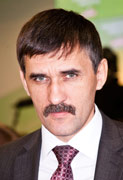
Editor-in-chief |
Sergey Aleksandrovich
MIROSHNIKOV |
|
|