|
|
|
№ 3 (251), 24 september 2026
doi: 10.25198/1814-6457
 Pedagogics
Akhayan A.A., Zair-Bek E.S., Ksenofontova A.N. CHARACTERISTICS OF THE STRATEGY OF IMMERSIVE LEARNING AS AN ANTHROPOLOGICAL PHENOMENONImmersive learning strategies have had a significant impact on educational innovation. Immersive learning technologies enable the rapid development and refinement of skills. Immersive learning is widely studied by specialists in neuroscience and cognitive psychology. Education is a multidimensional and complex process. Acquired knowledge encompasses knowledge of facts and phenomena and the development of a set of skills and competencies. Anthropology views learning not only as an individual cognitive process but also as a deeply social and cultural practice in education. Anthropology interprets learning as cultural transmission and studies how values, beliefs, and skills are transmitted across generations. The goal of this study is to identify the anthropological effects of immersive learning strategies and describe key transformations of subjective experience in immersive settings. We consider immersive learning strategies as an anthropological phenomenon, a unique sociocultural method of organizing the educational process. A discourse analysis of research on immersive strategies in education and a phenomenological approach to studying students' perceptions of immersive learning practices in schools revealed three key anthropological effects: a transformation of the experience of presence in solving various educational situations; a shift in the boundaries of the real/virtual world; and a restructuring of empathy mechanisms in teachers in accepting new digital technologies as a cultural and social phenomenon.Key words: immersive learning, authenticity of the learning environment in immersive learning, effects of immersive learning in school education, the School Metaverse project, objective and subjective dimensions of immersive learning.
Bolodurina I.P., Poyarkova E.N., Nevolina V.V. DESIGNING AN IN-HOUSE CORPORATE TRAINING PROGRAM FOR SYSTEM ANALYSTS IN A LARGE IT COMPANYThis paper presents the methodological experience of designing an in-house corporate training program for system analysts developed for a large IT company facing a persistent shortage of qualified specialists in systems and business analysis. The relevance of the study is determined by the need to establish effective corporate training mechanisms capable of rapidly developing employees’ professional competencies in accordance with the current demands of the digital economy, industry standards, and the practical requirements of IT projects. The purpose of the study is to analyze the structure, content, and methodological principles underlying the design of a corporate training program aimed at developing the professional competencies of system analysts and preparing them for real-world professional activities. The empirical basis of the study is a registry of educational artifacts serving as a structured working document that contains information on learning outcomes, module content, teaching methods, instructional formats, digital learning environments, software tools, and the distribution of responsibilities among subject-matter experts. The research employed methods of scientific and regulatory literature analysis, content analysis of the training program structure, and comparison of its components with the requirements of the Russian Professional Standard “System Analyst,” the Business Analysis Body of Knowledge (BABOK® Guide), and the ADDIE instructional design model. The findings demonstrate that the program consists of an entry diagnostic assessment, five thematic modules, team-based and individual practical assignments, and a final assessment of learning outcomes. Particular attention is paid to implementing the competency-based approach and the principles of andragogy through practice-oriented and blended learning, the use of integrated case studies, and modern professional tools for systems analysis, business process modeling, information systems architecture design, and API development. The paper substantiates the advantages of the proposed corporate training model and identifies directions for its further improvement, including the implementation of Kirkpatrick’s four-level training evaluation model and the development of post-training learner support mechanisms.Key words: corporate training; system analyst; business analysis; competency-based approach; andragogy; ADDIE model; BABOK Guide; blended learning; instructional design; training effectiveness evaluation.
Dokashenko L.V., Nevolina S.I. INTERNATIONAL FORUMS — A PLATFORM FOR SCALING AI SOLUTIONS IN EDUCATIONIn the context of globalization, the internationalization of education is becoming a key strategic priority for the development of universities, ensuring their integration into the global educational space. International forums are the most important communication platforms for consolidating the academic community and introducing artificial intelligence technologies into the educational process. Digitalization of education contributes to the diversification of international interaction formats with the predominance of hybrid and online formats, while maintaining the importance of face-to-face communication for the formation of trusting professional relationships. The Orenburg Region, which has a unique geopolitical position and rich cultural and historical potential, plays a special role in the development of international cooperation. International forums perform complex functions in the system of interuniversity cooperation, including the formation of strategic directions for the development of educational organizations, the development of promising programs and methodological approaches to the organization of the educational process. Important aspects of their functioning are the development of academic mobility and intercultural integration, facilitating the cross-border exchange of specialists. The introduction of artificial intelligence technologies into the educational process through international cooperation ensures the synchronization of educational standards, improving the quality of training specialists and strengthening their competitiveness. The study identified three dominant regional models of international cooperation: European (normative-oriented), Asian (technologically determined) and Russian (integration-cooperative). The methodological significance of the research lies in the possibility of using the results obtained to develop strategies for international cooperation, planning educational forums and scaling AI solutions in the educational field. This forms the theoretical and methodological basis for the development of international educational cooperation in the context of digital transformation, contributing to the creation of a unified educational space and improving the effectiveness of educational processes. Thus, international forums are comprehensive platforms that ensure a balance between regulatory regulation, technological development and institutional integration in the context of the formation of a single educational space.Key words: global educational space, international cooperation, artificial intelligence, academic mobility, educational exchange.
Chukhin S.G. UPDATING THE REFLECTIVE-FORMATIVE APPROACH TO THE COMMEMORATIVE RECONSTRUCTION OF CIVIC TRADITIONS IN THE SPACE OF SCHOOL ORGANIZATIONResearch background: developing a concept for the development of Russian civic identity in schoolchildren in contemporary sociocultural conditions necessitates the search for new pedagogical approaches to the commemorative reconstruction of civic traditions within the context of school life. Purpose of the study: this article substantiates the feasibility of applying a reflexive approach to the formation of schoolchildren’s Russian civic identity through the commemorative reconstruction of civic traditions within the school environment. Methods: through a theoretical analysis of pedagogical periodicals reflecting the discussion on the use of a reflexive-formative approach in everyday school life, the teaching community’s understanding of the application of a reflexive-formative approach to the commemorative reconstruction of civic traditions within the school environment was presented. Results and novelty: in developing the concept, we model the sociocultural factors in the formation of schoolchildren’s Russian civic identity, relying on their pentabasis, which serves as the structural framework for schoolchildren’s Russian civic identity, and the reflexive-formative approach within the school environment serves as a mechanism for overcoming identification risks. The leading mechanism here is the commemorative reconstruction of civic traditions, which is implemented through hermeneutic practices. This allows students not only to learn about traditions but also to understand them, internalize their values, and transform them from external dictates into internal behavioral regulators. This technology facilitates the reconstruction of school institutional structures, where civic traditions become an integral part of everyday life, shaping a unique child-adult community. The systemic nature of the reconstruction — the process is comprehensive and implemented through an interconnected system of hermeneutic practices (working with texts, family history, local history, etc.)Key words: Russian civic identity, reflection, reflective-formative approach, school structure space, civic traditions, commemorative reconstruction.
Esbusinova A.E., Chelpachenko T.V. INFLUENCE OF EDUCATIONAL ORGANIZATION ON FORMATION OF “RESPONSIBLE PARENTHOOD” IN HISTORICAL AND PEDAGOGICAL RETROSPECTIVEThe interaction between educational institutions and the parent community has a long history, during which the role of parents has undergone significant transformations. At each historical stage, the prevailing socio-pedagogical paradigm shaped the nature of this interaction — ranging from strict state regulation to modern partnership models. However, a gap persists in practice between the formally established mechanisms for parental participation in education governance and the actual level of their involvement; this limits the potential of state-public governance and reduces the effectiveness of educational and upbringing efforts. Our historical-pedagogical analysis reveals that the emergence of “responsible parenthood” in Russia has unfolded in several stages. A fundamental shift began during the Great Reforms of the 1860s with the establishment of boards of trustees for educational institutions. During the Soviet era, parent committees and the system of universal pedagogical education for parents cast them as “social assistants” to the school, though their participation remained under strict control. The 1990s saw the emergence of institutions for civic self-organization — such as independent parent associations and governing councils — culminating in the creation of the National Parent Association in 2013. The current stage is characterized by the legislative entrenchment of the state-public nature of education governance and the development of systems for the psychological and pedagogical education of parents through federal programs and projects. The evolution of Russia's education governance system has transformed the parent community from a passive object of management into an active, full-fledged participant in the educational process. The effectiveness of this model depends directly on the level of parental competence, making targeted parental education a strategic prerequisite for the success of educational reforms.Key words: parent community, “responsible parenting”, educational organization, state-public management of education, boards of trustees, universal parent education.
Gamova N.A., Lutovin E.M. PEDAGOGICAL CONDITIONS FOR TEACHING MATHEMATICAL ANALYSIS AT A UNIVERSITY TO STUDENTS OF TECHNICAL FIELDSThe modern world is rapidly changing under the influence of geopolitical and socio-economic transformations, which requires a new approach to teaching students and the introduction of breakthrough technologies and digital innovations in the teaching of disciplines. The article presents the results of a study aimed at identifying the pedagogical conditions for teaching mathematical analysis in the higher education system to ensure the competitiveness of future specialists who can effectively function in an increasingly technologically advanced environment. The article identifies the structural and content aspects of the methodology for teaching mathematical analysis. In the course of the conducted research, a pedagogical model was developed and theoretically substantiated, based on the following pedagogical conditions: the implementation of a strategy for updating educational content and practice-oriented learning to enhance the professional competence of students; the alignment of goals, objectives, and means of teaching mathematical analysis, using interactive technologies; integration of scientific and practical resources. The structure of the developing educational environment as a fundamental factor in the implementation of problem-based and applied contexts in the educational process is analyzed in detail. A mathematical interpretation of the process of teaching mathematical analysis is presented, demonstrating the functional dependence of the success of students’ socialization on their initial personal potential and the effectiveness of the chosen pedagogical strategy. As a result of using a set of pedagogical conditions for teaching mathematical analysis at a university, educational activity acquires a meaningful, content-based, and procedural foundation and structure; the set of forms, methods, and techniques for teaching mathematical analysis becomes a system-forming factor that unites the activities of teachers and students.Key words: mathematical analysis, teaching methods, pedagogical conditions, and modeling of the educational process.
Dzhulamanova G.S., Ezhova T.V. MEANINGFUL CHARACTERISTICS AND UPDATED PRIORITIES OF UNIVERSITY STUDENTS LEADERSHIP POTENTIALModern society is going through an era of serious transformation, caused by global changes in politics, economics, culture, and the system of social connections, which has led to the emergence of new requirements for the higher education system, transferring it to the mode of innovative development. One of the key places in solving new problems is occupied by the development of the problem of developing the leadership potential of student youth. Socially mature university graduates are in demand, capable of strategic planning, choosing optimal tactics for implementing the intended strategy, ready in the future to take responsibility for strategic decisions made, possible risks and failures, and build an optimal relationship between personal goals and values and public ones. The state order for the training of such specialists is reflected in a number of regulatory documents: the National Project “Science and Universities”, the Federal Project “Universities for a Generation of Leaders”, the Strategic Academic Leadership Program “Priority 2030”. In the context of this study, the leadership potential of a university student is interpreted as a set of resources and capabilities of an individual, based on inclinations, abilities, character traits, motivation, value-goals, providing the subject with the opportunity to take a leadership position in a group and apply his leadership abilities in individual and group activities. These resources and opportunities can be revealed and developed in the process of professional and personal development of the student. One of the most important aspects of the problem under study is the study of the mechanism of transition of leadership potential into actual leadership. This mechanism is based on the process of involving students in organizational activities, person-oriented interaction for the manifestation of initiative and role leadership, the formation of attitudes towards an active life position and the development of a leadership model of behavior from the position of prioritizing socially significant goals and values, proposing non-standard ideas and the ability to lead others.Key words: leadership potential, leadership, development of students’ leadership potential, content analysis, leadership qualities, inclinations, abilities, character traits.
Duzhnikov S.A. MEDIA PROJECTS AS A MEANS OF SELF‑REALIZATION FOR A FUTURE ADDITIONAL EDUCATION TEACHERCurrently, there is a pressing need to find effective pedagogical tools that will ensure the self‑realization of future teachers of additional education in the context of digital transformation. Media design meets the demands of modern realities, as it provides a creative way to implement professional ideas and goals. The results of domestic and foreign studies prove the effectiveness of media design for promoting a positive image of a university in the regional space, creating platforms and fostering active communication within the student community, coordinating media activity, and developing a general project culture and critical thinking in the process of students selecting media content. The development of media design within the organizational frameworks of centers and laboratories expands students’ opportunities for self‑realization, creates conditions for the discovery of talents, their practical application, and use for socially significant purposes, thereby enabling students to enrich and unlock their personal and professional potential. The organization of media design within an ecosystem opens up new opportunities for the self‑realization of future teachers of additional education. The article presents the experience of implementing a pedagogical technology based on the model “convergent media laboratory → content studio ‘Vibe Media’ → educational process → practice bases,” in which the media project is not the final product of the learning assignment, but a “cultivated” tool for self‑realization. The results of an experiment conducted at the V.A. Bondarenko Orenburg State University are presented, confirming the effectiveness of the technology and the model. Key words: self‑realization, future teacher, additional education, media projects, ecosystem approach, media laboratory.
Karelina M.V. JUSTIFICATION OF THE MAIN DIRECTIONS FOR IMPROVING TEACHERS’ TRAINING IN THE USE OF HIGH-TECH TRAINING EQUIPMENTThe digital transformation of education in transport-focused higher education institutions necessitates the use of simulator equipment incorporating artificial intelligence, robotic devices, and immersive technologies. Currently, existing professional development programs do not fully ensure that instructors possess the requisite level of professional-pedagogical training regarding the methodological support for utilizing high-tech railway simulator equipment (hereinafter referred to as HTSE). Consequently, there is a need to improve faculty training to enable the effective use of such equipment in addressing professional tasks. Simulator-based training is currently conducted largely on an ad hoc basis, lacking the necessary didactic, instructional-methodological, and medical-psychological support. It is essential to develop faculty competence in the use of modern HTSE. The developed course program — “Theoretical and Methodological Support for Utilizing Railway HTSE Based on AI-Driven Didactic Approaches” — comprises a structured set of interconnected theoretical components. These cover fundamental concepts of AI, robotics, and immersive technologies; the theoretical aspects of HTSE application in the railway sector; and the methodological foundations of AI-driven didactic approaches. An experiment demonstrated that, following completion of this course, 71.54 % of participants achieved a medium or high level of competence in utilizing HTSE based on AI-driven didactic approaches.Key words: high-tech training equipment, opportunities, improvement, training, directions, advanced training.
Korobeynikova A.A. DEVELOPING COMMUNICATIVE COMPETENCE IN PHILOLOGY STUDENTS THROUGH THE STUDY OF TOLERANT SPEECH COMMUNICATIONIn accordance with the Federal State Educational Standard of Higher Education (FGOS VO), it is essential to develop communicative competence in future philologists. Higher education practice faces a persistent contradiction between the traditional format of teaching linguistic disciplines — focused primarily on mastering the language system — and the objective need for graduates to master strategies for verbal interaction in non-standard communicative situations. This gives rise to the need to identify a scientific basis for pedagogical conditions and methodological solutions that foster the conscious, reflective, and practice-oriented development of communicative competence, ensuring it meets the modern challenges of the professional environment and employer requirements. The study aims to provide a theoretical justification for a methodology to develop communicative competence in future philologists based on a comprehensive analysis of conversational dialogues. The new-generation educational standard sets requirements for training practicing philologists within the bachelor’s degree system, emphasizing methods of research and practical activity in the fields of communication and text. Within the anthropocentric paradigm, the focus of professional philological education is on shaping a “linguistic personality” — an individual who not only commands grammar and vocabulary but is also capable of creating and interpreting speech acts while accounting for cultural and situational contexts. Competence, as the core concept of the competence-based approach, encompasses cognitive, operational-technological, motivational, ethical, social, and behavioral components. A “tolerant communicative personality” — capable of establishing constructive dialogue and achieving mutual understanding with individuals whose views, values, or behavioral patterns differ significantly from their own — emerges as the target objective of linguistic education. Knowledge of key concepts in speech-related disciplines, combined with communicative skills at both reproductive and productive levels, constitutes the essence of communicative competence. The development of communicative competence and the study of conversational dialogue are deeply interconnected; the study of one serves as both the foundation and the goal for the other. The level of communicative competence among philology students depends on structuring instruction as a staged process of analytical and speech-based activity (analysis — editing — dialogue creation) grounded in the conceptual framework of communicative pragmatics.Key words: communicative competence, professional competence, philological education, dialogue, communication, tolerance.
Semenova N.G., Komissarova T.V. APPLICATION OF ELECTRONIC TRAINERS IN THE PROCESS OF FORMING PROFESSIONAL SKILLS AND ABILITIES OF ELECTRICITY STUDENTSTraining qualified personnel for the Russian electric power industry, as the country strives to achieve technological leadership, is a top priority and promising area of student training in engineering and technical specialties. While university graduates demonstrate a high level of theoretical knowledge, the professional skills and abilities in demand in the electric power industry do not meet employer requirements. In the context of the current digital transformation of education, the use of various types of electronic educational resources, including electronic simulators, plays a key role in improving the professional knowledge, skills, and abilities of engineering and technical students. The aim of this study is to determine the correlation between the use of electronic simulators used in electrical training and the achievement of a certain level of professional skills and abilities required by employers in the electric power industry. An analysis of the regulatory framework for higher education in the 13.03.02 “Electric Power and Electrical Engineering” program and the current professional standard in the electric power industry revealed three hierarchically linked levels of professional skills required of future specialists in electric power industrial enterprises: performing operational actions with electrical devices/objects; designing and modeling electric power facilities/systems; and making decisions in non-standard (emergency) situations involving electrical networks and electrical equipment. For each level, didactic descriptors characterizing the necessary professional skills and abilities are substantiated. It is proposed to develop professional skills and abilities using electronic training simulators (ET). The study classifies electronic training simulators into three types: static (quasi-dynamic) ET; dynamic ET; and virtual simulators. Each group is characterized, and examples of ETs in each group used to develop the professional skills and abilities of electrical engineering students are provided. A matrix of the correspondence between the use of the identified ET types and specific levels of professional skills and abilities is created. It is argued that ETs should be developed with due regard for the didactic capabilities of ICT, and their content should reflect the subject-specific aspects of the specialized disciplines of electrical engineering students.Key words: electronic simulators, the process of teaching electrical students, professional skills, professional abilities.
Chernaya L.V., Lazutkina E.A., Gonokhova M.N. FORMATION OF STUDENTS’ PROFESSIONAL COMPETENCE THROUGH THE INTENSIFICATION OF RESEARCH ACTIVITIES AT THE MEDICAL UNIVERSITYA modern doctor is constantly faced with a huge amount of new information and unusual situations that require an emergency solution. In this regard, the professional competence of such a doctor begins to form from the first courses of study at the university. An important role in this process is played by research activities, which teach not just to memorize algorithms, but to analyze, look for non-standard solutions and evidence of applied methods in their practical activities. A modern person needs to fully realize their competencies in the professional field, but their formation begins on the basis of general education and is subsequently implemented into a set of professional qualities. Not all students are interested in scientific work, therefore, a large role in the formation of research skills belongs to the university faculty, and especially those working with first-year students. Because at first it is difficult for students to formulate research goals and objectives, as well as plan an experiment and select the necessary arsenal of methods. In this regard, the discipline of Biology plays an important role for medical students. At the Department of Biology of Omsk State Medical University, students receive basic skills in the course of educational and research work. The initial competence development process is carried out by obtaining a theoretical knowledge base on the disciplines implemented by the department. It allows you to involve all students, including foreigners, who use English as an intermediary language in the learning process. Subsequently, new knowledge, skills and abilities are used by students to carry out independent research work. Widely used individual and team projects, poster presentations, conference presentations, writing abstracts and articles contribute to the formation of students’ professional competence. Key words: professional competence, research activity, biology, medical education.
Scheglova M.I., Orlova E.V. PROFESSIONAL MEMES IN FORMATION OF PHILOSOPHER IMAGE AMONG STUDENTSWe examine professional memes as a pedagogically significant phenomenon of digital culture that influences the processes of professional training, socialization, and identity formation among students. Memes serve not only as a form of online communication but also as an informal didactic tool embedded in the hidden structure of professional education. They mediate the acquisition of “tacit knowledge,” facilitate the transition from an academic conception of the profession to its practical reality, and play a role in shaping students' professional attitudes and behavioral patterns. Memes help shape specific values, norms, and emotional patterns. The meanings conveyed by memes regarding the image of the “philosopher” profession can be classified into three types: first, a profession with a low rate of converting highly developed intellectual skills into career and financial success; second, a profession that transcends the “study” (or ivory tower), making all life situations objects of philosophical reflection; and third, a profession lacking concrete content, where the work essentially amounts to “waffling” or empty verbiage. This third type is often linked to references regarding marginalized practices. Themes of intellect and exceptionalism in memes help mitigate negative connotations surrounding the future profession of a philosopher, even amidst a high degree of ambivalence in meaning. The positive impact of integrating professional memes into the students' information environment stems from the dialectical nature of the phenomenon itself. While irony and humor — the primary methods for crafting a meme's idea or meaning — may reinforce negative stereotypes (often as a psychological defense mechanism for the creator), they simultaneously prepare students for the challenges associated with entering the profession and pursuing a career. In other words, while memes may entrench negative aspects of the profession — often in exaggerated form — exposing these realities familiarizes students with conditions of professional development that are typically obscured by conventional methods of learning about the field.Key words: memes, professional memes, online communication, philosopher, profession, socialization.
Psychology
Kuzmenkova O.V. DEVELOPMENT OF REFLECTIVE ABILITIES IN TEACHERS WITH PROFESSIONAL DIFFICULTIES (DIFFERENTIATED APPROACH)The need to address the issue of teachers’ professional difficulties is determined by the dynamic changes in modern Russian education. The complexity of the current educational environment requires teachers to constantly adapt to new developments, continuously expand their professional tasks, and experience high levels of emotional stress. This necessitates identifying the main “teaching” difficulties and finding personal resources to effectively overcome them. The conducted theoretical analysis identified the initial theoretical and methodological principles that substantiate the positive role of professional difficulties, which, through reflection on the current circumstances and personal resources, provide teachers with the opportunity to overcome the difficulties themselves and expand their individual professional experience. It has been empirically established that a significant proportion of teachers experience difficulties in various areas of their professional work (communicative, personal, scientific-methodological, and psychological-pedagogical) during the implementation of their pedagogical activities. An empirical study of the characteristics of teachers’ reflection has revealed the prevalence of “psychologically inferior” reflective abilities characterized by a focus on external intentional objects, the subject itself, and extraneous objects beyond the current situation. To effectively overcome professional difficulties, teachers need to possess systemic reflection (a focus on both themselves and the object simultaneously). The search for effective practical psychological and pedagogical tools to improve the reflective abilities of teachers with different types of professional difficulties led to the creation of a developmental program that includes a general block (development of basic skills in systemic reflection) and a differential block (development of reflective abilities for teachers with different professional difficulties). After the developmental program was tested on an experimental group, statistical evidence was obtained indicating an increase in teachers’ abilities to engage in systemic reflection compared to the control group. Key words: teacher’s professional difficulties, reflective abilities, systemic reflection, and a developmental program.
|
|
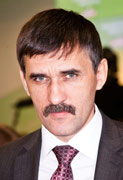
Editor-in-chief |
Sergey Aleksandrovich
MIROSHNIKOV |
|
|