|
|
|
Yurchenko M.A.
FORMATION OF NATIONAL IDENTITY AND CIVIC CONSCIOUSNESS: PROFESSIONAL AND PEDAGOGICAL CULTURE [№ 4 ' 2025]
In the context of globalization and growing cultural diversity, the education system faces the need to develop students' national identity and civic consciousness. However, the current level of professional and pedagogical culture among teachers is often insufficient to address these challenges. An analysis of professional development programs revealed a lack of comprehensive interdisciplinary courses that would integrate teaching and learning, combining the theoretical foundations of various fields of scientific knowledge with pedagogical practice. The goal of my research was to overcome this deficiency by developing a specialized program combining cultural studies, political science, philosophy, and pedagogy. The professional development program I developed is structured into two modules: a theoretical module devoted to the foundations of identity formation, and a practice-oriented module exploring new didactics (the "projectbased learning" system). Particular attention is paid to developing teachers' skills in working in a multicultural environment, critical thinking, media literacy, and the use of modern educational technologies. Testing the program at several educational levels (school teachers, college professors, and university instructors) confirmed its effectiveness in helping students master methods of designing educational activities, analyzing discourse, and developing tolerance. The main conclusion of this phase of the study is that the systemic approach implemented in the course allows for a qualitative improvement in the level of professional and pedagogical culture in terms of developing national identity and civic consciousness in students, while the chosen formats facilitate its adoption by colleagues from different regions of the country and the application of the author's concept in a variety of educational contexts. The program meets the requirements of educational standards and the professional standard "Teacher," helping to bridge the gap between theory and practice, and its implementation strengthens a unified educational space and the spiritual and moral foundations of society.
Guskova A.P., Jurchenko L.V.
FUNCTIONS JUVENAL OF LEGAL PROCEEDINGS [№ 3 ' 2010]
Functions juvenal legal proceedings as legal institute, represent the certain directions of legal influence expressing appointment of justice on affairs of minors which are connected thus with practice of its realisation. Thus they are caused by its role and a place in juvenal to system, and also as a whole and system of protection of the rights of minors.
Jurchenko L.V.
THEORETICAL BASES OF REGENERATIVE JUSTICE. THE TECHNIQUE"CASE-MANAGEMENT". [№ 3 ' 2010]
Now the judgement concerning minors is poorly interconnected with rehabilitation process and not focused on it. Model juvenal probaci, and within the limits of its technique. A "case-management" is one of the prime conditions, capable to provide success of a policy of liberalisation of criminal justice spent to Russia concerning minors and is, according to the author, development juvenal technologies in a creation context juvenal justices focused on regenerative justice.
Yurchenko L.V.
DEVELOPMENT OF CRIMINAL LEGAL PROCEDURE AT CASES IN RELATION TO UNDERAGE PERSONS (JUVENAL LEGAL PROCEDURE) [№ 3 ' 2008]
This article is devoted to the important theme: development of criminal legal procedure at cases of underage persons (juvenal legal procedure).
Yurchenko L.V.
EVIDENCES APPRAISAL ON THE STAGE OF PREPARATION TO THE TRIAL [№ 3 ' 2005]
The stage of case preparation to the hearing, which was named early as the stage of committal, is discussed in this article. The problem of control during this process stage is regarded here, and the problem of evidences appraisal is researched. The question of moral certainty of judges is searched.
Yurchenko R.N.
TORTURE PREVENTION PROBLEMS [№ 3 ' 2004]
The article considers up to date matters concerning torture prevention problems under legislation of Kazakhstan Republic. There should be mental element and objective element for criminal responsibility attachment as for illicit act inflicting physical and mental sufferings to a person. The criminal responsibility was carried into effect by criminal legislation of Kazakhstan Republic on December 21, 2002. The author tells about it.
|
|
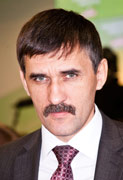
Editor-in-chief |
Sergey Aleksandrovich
MIROSHNIKOV |
|
|