|
|
|
Stepanova I.P., Atavina O.V., Mugak V.V., Fortus A.V.
A SYSTEM OF TECHNOLOGIES AND METHODS FOR IMPROVING THE QUALITY OF DENTAL STUDENTS’ KNOWLEDGE IN THE DISCIPLINE OF CHEMISTRY AT THE HIGHER MEDICAL SCHOOL [№ 2 ' 2026]
Researches into the technologies and methods of chemistry teaching in the medical schools are limited. As a rule, their effectiveness is not quantified, particularly through academic performance. Furthermore, students› backgrounds are not considered. The aim of this study was to evaluate the effectiveness of the teaching technologies and methods used in the Chemistry Department at Omsk State Medical University by examining the academic performance of dental students with the varying background levels. The Chemistry Department utilizes practice-oriented teaching, which imbues traditional course content with a practical meaning and establishes logical connections with other disciplines in the natural sciences, general professional, and professional fields. Based on modern scientific data, faculty in the Chemistry Department have developed original educational and assessment assignments, including creative ones, for various modules of the course. The assignments have the varying levels of difficulty. At the initial stage of their university studies, students with secondary vocational education, who traditionally have poor entrance exam results, are offered assignments that lack significant quantitative calculations but require knowledge of oral biochemistry and microbiology or primary clinical experience. These students are very interested in the creative assignments. While the current exam results of medical college graduates remain low, their midterm assessment scores are no longer significantly different from those of students with a general secondary education. The discussed system of teaching technologies and methods achieves the educational goal of improving the quality of knowledge in the discipline “Chemistry” among future dentists. Practice-oriented learning enhances student motivation, develops their cognitive activity, and fosters critical thinking. This system tailored to students› backgrounds, play an important role.
Stepanova I.P., Atavina O.V., Mugak V.V., Fortus A.V.
SCIENTIFIC AND PRACTICAL CONFERENCE FOR STUDENTS AS A RELEVANT MEANS OF DEVELOPING PROFESSIONAL COMPETENCIES [№ 1 ' 2026]
Research on the contribution of the scientific events, including those focused on natural sciences, to the development of professional competencies in future physicians are limited: they do not fully address the significant transformations in the organization of the scientific and practical conferences that have occurred over the past decade. The aim of this study was to examine changes in organizing of the student scientific event at a Higher Medical School.
These new features are illustrated using the example of the All-Russian conference with international participation of students and young scientists “Modern Issues in Natural Sciences and Medicine. Man and His Health,” organized by the chemistry, physics, biology, and biochemistry departments at Omsk State Medical University (The conference program and report were analyzed.). Domestic and international literature sources were selected and examined. Theoretical research methods — analysis, synthesis, and generalization — were used.
First of all, this conference has acquired many scientific directions of a transdisciplinary nature: in particular, the topics have concerned the main areas of natural science education (chemistry, physics, biology, and biochemistry). Secondly, the event’s role as a platform for the exchange of experience, including internationally, has increased: there has been a significant increase in the number of presentations and participants. Changes have also affected the format of scientific events: the focus has shifted from traditional format (plenary and final sessions, sections) to innovative one (interactive sessions, including short sessions with group reflection; student stand-up presentations; real-time feedback; gamification). Organizing a student and young scientist scientific event of the new format should become a priority for natural science departments at medical universities.
Stepanova I.P., Atavina O.V., Mugak V.V.
STUDENT RESEARCH ACTIVITIES WITHIN A YOUTH RESEARCH CLUB IN THE CHEMISTRY DEPARTMENT OF A MEDICAL UNIVERSITY [№ 4 ' 2025]
At universities, a traditional form of unscheduled research is the youth research club. Considerable attention has been devoted to the organization of youth research clubs, defining the objectives, principles, and stages of developing research skills. However, studies conducted in this area rarely discuss specific models for organizing research clubs, the content and format of their meetings, and the topics of research. Student engagement in research remains a challenge. Our study was conducted to identify successful examples of organizing a youth research club to stimulate student engagement in research. The key components for improving the organization of a research club are the analysis of its plans and reports, as well as student opinions. The research club in the Chemistry Department of Omsk State Medical University operates according to a model that includes goal-setting and planning, process and monitoring, performance and reflection, and feedback. The club is supervised by mentor teachers and senior students. The youth scientific club's goals are broad and include a civic and patriotic focus. Club meetings focus not only on scientific methodology but also on the validation of results. A study of student perceptions and attitudes toward scientific work revealed that
|
|
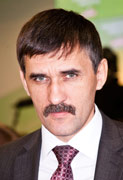
Editor-in-chief |
Sergey Aleksandrovich
MIROSHNIKOV |
|
|