|
|
|
Duzhnikov S.A.
MEDIA PROJECTS AS A MEANS OF SELF‑REALIZATION FOR A FUTURE ADDITIONAL EDUCATION TEACHER [№ 3 ' 2026]
Currently, there is a pressing need to find effective pedagogical tools that will ensure the self‑realization of future teachers of additional education in the context of digital transformation. Media design meets the demands of modern realities, as it provides a creative way to implement professional ideas and goals. The results of domestic and foreign studies prove the effectiveness of media design for promoting a positive image of a university in the regional space, creating platforms and fostering active communication within the student community, coordinating media activity, and developing a general project culture and critical thinking in the process of students selecting media content. The development of media design within the organizational frameworks of centers and laboratories expands students’ opportunities for self‑realization, creates conditions for the discovery of talents, their practical application, and use for socially significant purposes, thereby enabling students to enrich and unlock their personal and professional potential. The organization of media design within an ecosystem opens up new opportunities for the self‑realization of future teachers of additional education. The article presents the experience of implementing a pedagogical technology based on the model “convergent media laboratory → content studio ‘Vibe Media’ → educational process → practice bases,” in which the media project is not the final product of the learning assignment, but a “cultivated” tool for self‑realization. The results of an experiment conducted at the V.A. Bondarenko Orenburg State University are presented, confirming the effectiveness of the technology and the model.
Dmitrieva N.M., Duzhnikova M.A., Porol’ O.A.
LINGUISTIC AND CULTURAL COMMENTARY AS A WAY OF FOREIGN STUDENT IMMERSION IN THE RUSSIAN MENTALITY (ADVANCED LEVEL) [№ 3 ' 2021]
Teaching Russian as a foreign language when working with literary texts is aimed at developing skills in foreign students that allow them to comprehend a text filled with meaningful vocabulary, which can be used later in the process of communication with native speakers of the Russian language. The tool for this type of work is a linguistic and cultural commentary, which contains linguocultural information that contributes to the understanding of the text at all stages of working with it: pretext, pretext and posttext.
Linguistic and regional commentary on the story of I.A. Bunin's “The Grammar of Love” includes brief information about the era in which the events of the work unfold; definitions of linguistic culture found in the text; commenting on the literary images of the story that are found in other works of Russian literature, constant epithets. The attention of foreign students is also drawn to the material illustrating episodes, images, characteristic features of the era of the story: paintings, music, songs, and other literary works. Working with other literary works in teaching Russian as a foreign language can also be based on a linguistic and cultural commentary.
The use of linguistic and cultural commentary in the lessons of RFL when working with literary texts that reflect the life of the Russian people will allow foreign students to understand not only the peculiarities of everyday life, customs and traditions, but also spiritual and moral values. This work has a practical orientation and allows you to use the materials obtained during the research in the lessons of RFL in order to form the linguistic and cultural competence of foreign students.
|
|
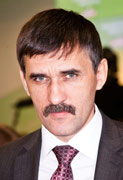
Editor-in-chief |
Sergey Aleksandrovich
MIROSHNIKOV |
|
|